The Pinacoteca Ambrosiana is one of Milan’s essential cultural stops because it brings together, in one refined and manageable visit, Caravaggio’s Basket of Fruit, Raphael’s monumental cartoon for The School of Athens, and Leonardo da Vinci’s Portrait of a Musician alongside pages from the Codex Atlanticus. It is practical, central, intellectually rich, and perfectly suited to travelers who want a high-value museum experience without giving up the rest of the city. The museum’s official guidance suggests about 90 minutes for a self-guided visit, and Ad Artem offers official guided tours for visitors who want deeper context.
There are museums you visit because they are famous, and there are museums you remember because they feel concentrated, intelligent, and beautifully paced. The Pinacoteca Ambrosiana belongs firmly to the second category. Founded in 1618 thanks to Cardinal Federico Borromeo’s donation, it is not just a room full of masterpieces: it is a cultural statement in the heart of Milan, shaped by the idea that art, books, and learning belong together.
For the international visitor, that matters. Milan can sometimes be misunderstood as a city of fashion first and culture second. The Pinacoteca Ambrosiana quietly corrects that impression. Inside, the experience is less about rushing from one “must-see” to another and more about entering a conversation between artists, collectors, patrons, and ideas. You are not dealing with an oversized museum that demands half a day and heroic stamina. You are dealing with a collection that rewards attention.
Why the Pinacoteca Ambrosiana is a must in Milan
One of the strongest reasons to include the Pinacoteca Ambrosiana in your itinerary is simple: it delivers extraordinary names in a very workable format. According to the museum’s own visitor information, a self-guided visit takes about 90 minutes, with opening hours currently listed as 10:00 to 18:00 and the ticket office closing at 17:30. That makes it ideal for a cultured morning, a serious late-afternoon visit, or as part of a carefully curated day in central Milan.
Another reason is quality over noise. The Pinacoteca Ambrosiana does not overwhelm. It gives you time to stand in front of individual works and actually look. That is increasingly rare, and for many travelers it is the real luxury: not more art, but better contact with it. The museum’s own suggested route points visitors first toward Caravaggio, then Raphael, and finally Leonardo and the Codex Atlanticus on the ground floor, which already tells you something about the coherence of the experience.
|
|
|
Don't miss out on Milan's ultimate secret!
|
| |
|
| |
Experience the jaw-dropping Castle’s Rooftop Panoramic Walk where history and stunning views collide.
Witness Sforza Castle and the dazzling cityscape like never before. This is your once-in-a-lifetime adventure.
|
| |
|
|
|
|
|
|
Pinacoteca Ambrosiana highlights: Caravaggio’s Basket of Fruit
Let us begin with the work that often surprises people most. Caravaggio’s Basket of Fruit is not large, not theatrical in the blockbuster sense, and yet it has the magnetic authority of a painting that changed the rules of looking. The Ambrosiana identifies it as one of its signature masterpieces, and rightly so.
Seen in person, the painting is a lesson in precision and unease. The fruit is luscious, but not idealized. Leaves curl, blemishes appear, life is already tipping toward decay. This is one reason the work stays with visitors: it is beautiful, but never complacent. In a city that often dazzles with polish, Caravaggio offers something sharper—truth with elegance. If you enjoy artworks that reveal more the longer you stay with them, start here and do not rush. The museum map places this stop right at the beginning of the visit, in Room 1.
Pinacoteca Ambrosiana highlights: Raphael’s giant thought process
Then comes Raphael, and with him one of the most extraordinary things the Pinacoteca Ambrosiana offers: the preparatory cartoon for The School of Athens. This is not a minor sketch or a decorative study. It is a monumental working thought, a huge act of composition in progress, linked to one of the most celebrated frescoes of the Renaissance.
For visitors, the impact is immediate. You are suddenly very close to the intelligence behind the finished masterpiece. The grandeur is there, but so is the workshop mind: placement, rhythm, dialogue, architecture, gesture. In practical terms, this is the point in the museum where many people slow down. Good idea. Raphael deserves time because this work rewards a double reading: first as spectacle, then as process. The museum’s route places it in Room 5, which helps structure your visit neatly
 Pinacoteca Ambrosiana highlights: Leonardo in Milan, beyond the cliché
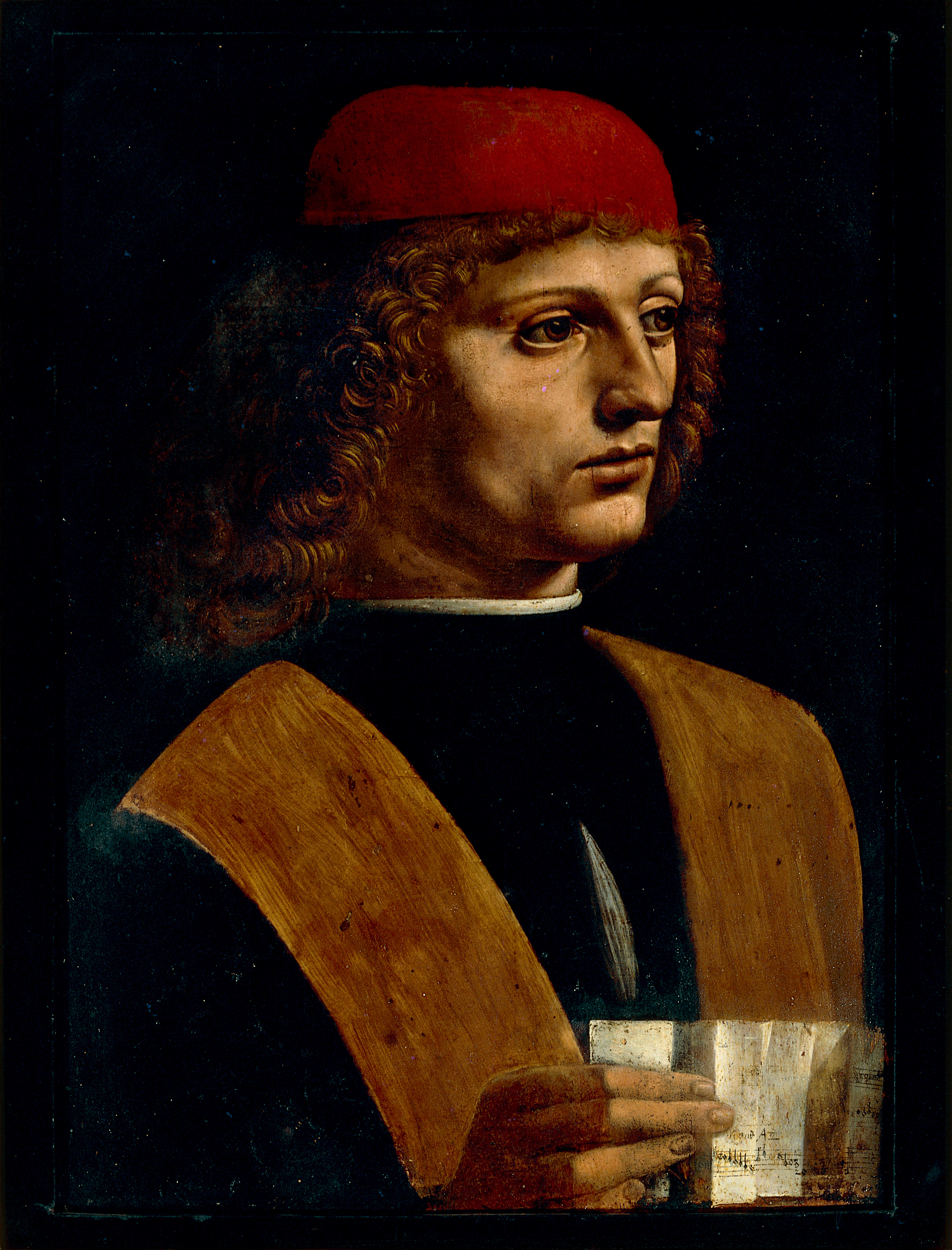
Leonardo in Milan usually means The Last Supper in the public imagination. Fair enough. But the Pinacoteca Ambrosiana gives you a different and, in some ways, more intimate Leonardo. On the ground floor, visitors are directed toward the Portrait of a Musician and drawings from the Codex Atlanticus. The latter is described by the Ambrosiana as the largest collection of Leonardo da Vinci’s writings and drawings, while the Federiciana Hall hosts rotating sheets from that extraordinary body of work.
This is where the museum becomes especially rewarding for travelers who want more than the obvious checklist. The Portrait of a Musician carries that peculiar Leonardesque ambiguity—presence, psychology, restraint—while the Codex Atlanticus opens a different door entirely: Leonardo not just as painter, but as restless observer, designer, engineer, and thinker. That combination is one of the great strengths of the Pinacoteca Ambrosiana. You do not merely “see a Leonardo”; you enter Leonardo’s mental universe.
How to plan a practical visit to the Pinacoteca Ambrosiana
Here is the practical version. Give the Pinacoteca Ambrosiana 90 minutes if you are self-guiding, and a little more if you like to linger. Because last admission procedures tighten toward the end of the day and the ticket office closes at 17:30, it is wiser to arrive no later than mid-afternoon if you want a relaxed visit. The museum also proposes shorter internal routes of around 60 minutes, which can work well if your Milan schedule is dense.
Who is this museum best for? Travelers who enjoy masterpieces, certainly, but also visitors who appreciate structure, atmosphere, and interpretation. That is where Ad Artem becomes especially relevant. As the official educational concessionaire and collaborator for the site, Ad Artem offers guided tours, private visits, and tailored experiences that help turn a good museum stop into a memorable cultural appointment. For visitors who prefer meaning over mere attendance, that is often the right move.
A final note: do not reduce the visit to only the three headline names. The Ambrosiana also holds Flemish works and important Lombard and Venetian Renaissance paintings, so even if Leonardo, Caravaggio, and Raphael are your anchors, leave room for surprise. The pleasure of this museum lies partly in that balance between iconic recognition and quieter discovery.
After the Pinacoteca Ambrosiana: the hidden Milan experience most visitors miss
|
|
|
Don't miss out on Milan's ultimate secret!
|
| |
|
| |
Experience the jaw-dropping Castle’s Rooftop Panoramic Walk where history and stunning views collide.
Witness Sforza Castle and the dazzling cityscape like never before. This is your once-in-a-lifetime adventure.
|
| |
|
|
|
|
|
|
Now for the suggestion many travelers do not know about, and absolutely should. After your museum visit, do not stop at street level. Head for the Castle’s Rooftop Panoramic Walk at Sforza Castle. It’s a self-guided route through the castle’s defensive system, beginning at the grand staircase of the Cortile della Rocchetta and ending at the top of the Treasure Tower, with broad views over Milan’s skyline. No guided reservation is required, and the route is designed with accessibility in mind, including a dedicated elevator.
Why pair it with the Pinacoteca Ambrosiana? Because together they create a wonderfully balanced Milan day. At the Ambrosiana, you meet the city through genius, collection, and memory. At the castle rooftops, you meet it through space, fortification, and panorama. One refines your eye; the other resets your sense of the city. And yes, it still feels like a secret compared with Milan’s better-known classics.
In the end, that is exactly why the Pinacoteca Ambrosiana is so worth your time. It is not simply a museum where famous names happen to coexist. It is a compact, intelligent, and deeply Milanese experience—one that lets you move from Caravaggio’s fragile fruit to Raphael’s grand design and Leonardo’s extraordinary mind in a single visit. In a city full of major attractions, that kind of concentration is rare. And for travelers who prefer substance with style, it is hard to imagine a better stop.
FAQ: Pinacoteca Ambrosiana
What are the main highlights of the Pinacoteca Ambrosiana?
The best-known highlights are Caravaggio’s Basket of Fruit, Raphael’s preparatory cartoon for The School of Athens, Leonardo da Vinci’s Portrait of a Musician, and rotating sheets from the Codex Atlanticus.
How long does a visit to the Pinacoteca Ambrosiana take?
The museum’s official FAQ says a self-guided visit takes about 90 minutes. The institution also proposes shorter routes of around 60 minutes for visitors with less time.
What are the current opening hours of the Pinacoteca Ambrosiana?
The official visitor information currently lists opening hours as 10:00 to 18:00, with the ticket office closing at 17:30. It is wise to verify special openings before your visit.
Is the Pinacoteca Ambrosiana worth visiting if I already booked The Last Supper?
Yes. The Last Supper gives you Leonardo the muralist; the Pinacoteca Ambrosiana gives you Leonardo the portraitist and thinker, alongside major works by Caravaggio and Raphael in a single museum visit.
Can I visit the Pinacoteca Ambrosiana with a guide?
Yes. Ad Artem is the official educational concessionaire/collaborator and offers guided tours, private visits, and other tailored experiences at the museum.
What lesser-known experience should I combine with the Pinacoteca Ambrosiana?
A very strong pairing is the Castle’s Rooftop Panoramic Walk at Sforza Castle, a self-guided elevated route through the castle’s upper defensive areas with wide views over Milan.
Credits
<a href="https://commons.wikimedia.org/wiki/File:Leonardo_da_Vinci_-_Portrait_of_a_Musician_-_Pinacoteca_Ambrosiana.jpg">Leonardo da Vinci</a>, Public domain, via Wikimedia Commons
<a href="https://commons.wikimedia.org/wiki/File:Milano_-_Pinacoteca_Ambrosiana_-_2024-09-20_18-44-45_001.jpg">Pinacoteca Ambrosiana</a>, <a href="https://creativecommons.org/licenses/by-sa/4.0">CC BY-SA 4.0</a>, via Wikimedia Commons
Insights
Basilica of Sant’Ambrogio Milan: History, Treasury and What Not to Miss
Museo del Novecento Milan: How to Visit and What to See
Codex Atlanticus Milan: Why the Ambrosiana Is a Must for Leonardo Lovers